Building a Persona Governance System: Ownership, Updates, Rules
Learn how to build a persona governance system with clear ownership, update rules, and structured persona models based on real data.

Building a Persona Governance System: Ownership, Updates, Rules
User personas lose value when they are created once and never revisited. Without ownership, update rules, and validation, personas drift away from real user behavior and stop guiding decisions. A persona governance system ensures that user personas remain accurate, actionable, and aligned with real audience needs over time.
This article explains how to establish governance around personas using behavioral segmentation, structured updates, and clear accountability.
Why Persona Governance Is Necessary
Personas often fail due to neglect, not poor initial research. As products evolve, personas must evolve too.
Common governance gaps include:
no clear owner for persona data
outdated buyer persona examples
reliance on static persona templates
limited connection to customer journey mapping
Without governance, personas become opinions instead of tools.
Governance Turns Personas Into Systems
A governance model transforms personas from documents into living assets supported by continuous data and review cycles.
Defining Ownership and Accountability
Every persona needs a clear owner responsible for accuracy and relevance.
Ownership responsibilities include:
validating persona data against analytics
coordinating updates with research and marketing teams
ensuring alignment with marketing personas and product needs
approving changes to the persona model
Clear ownership prevents uncontrolled edits and fragmentation.
Shared Input With Central Control
While ownership is centralized, input from UX, marketing, and product teams ensures personas reflect diverse perspectives.
Establishing Update Rules for Personas
Personas should not change randomly. Updates must follow clear triggers.
Typical update triggers include:
major product pivots
shifts in behavioral segmentation
new insights from empathy mapping
changes in demographic data analysis
Regular reviews ensure personas reflect current reality, not past assumptions.
Persona Governance Framework
Governance Element | Purpose | Outcome |
|---|---|---|
Persona owner | Accountability | Consistent updates |
Update cadence | Predictability | Reduced persona drift |
Data sources | Validation | Accurate persona data |
Review criteria | Quality control | Reliable persona model |
Documentation rules | Consistency | Scalable archetype design |
This framework creates stability while allowing controlled evolution.
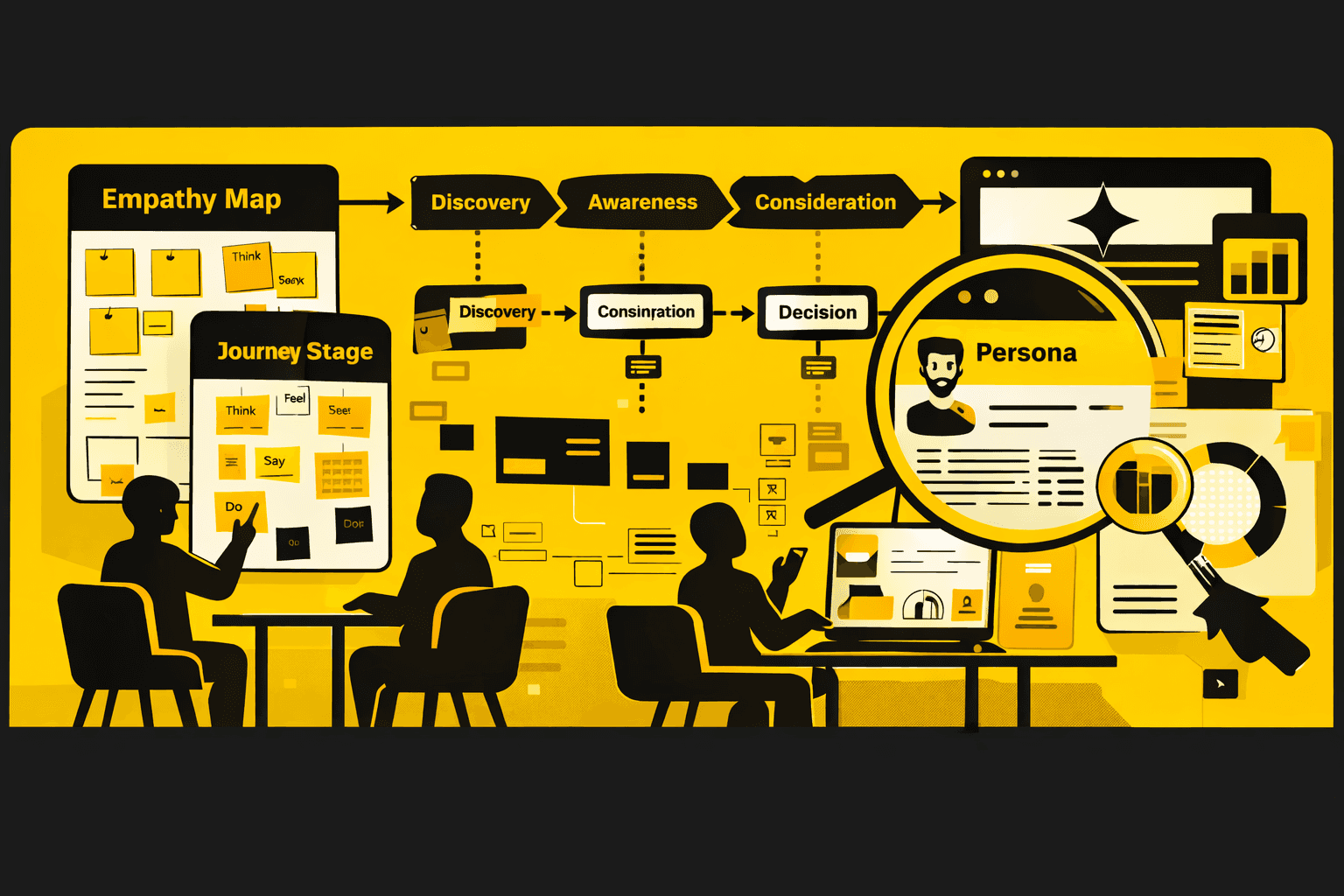
Aligning Personas With Real User Journeys
Governed personas must map directly to customer behavior.
Best practices include:
linking personas to customer journey mapping stages
validating assumptions through behavioral data
separating motivations from demographics
refining archetype design as patterns emerge
This ensures personas guide real decisions across teams.
From Static Profiles to Living Models
A governed persona model evolves alongside the product, staying useful long after its creation.
Conclusion
We have found that building a persona governance system makes sure that user personas stay trustworthy, relevant, and useful. The persona governance system defines ownership sets, update rules, and links each persona, to behavior groups and real data.
The persona governance system helps teams avoid persona drift and avoid decision confusion. The persona governance system turns personas into assets that support user‑centered growth.