Rewriting Personas After a Product Pivot: How to Realign User Understanding Fast
A practical guide to updating user personas after a product pivot using behavioral segmentation, persona data, empathy mapping, and archetype design. Includes templates, banners, and a comparison table.

Rewriting Personas After a Product Pivot: The Fastest Way to Realign with Your New Audience
A product pivot changes everything: your value proposition, audience expectations, and the behavioral motivations behind user decisions.
Yet most teams continue operating with old user personas that no longer represent real customers.
Rewriting personas after a pivot isn’t optional — it’s the first step in restoring product clarity, redefining messaging, and making sure every decision aligns with actual user needs.
This guide shows how to replace outdated personas using behavioral segmentation, customer journey mapping, persona data, and archetype design.
Why Personas Break After a Pivot
A pivot usually shifts at least one of the following:
1. Value Proposition
The product solves a different problem—or the same problem for a different group.
2. Target Audience
Audience profiling and demographic data analysis reveal new users with new motivations.
3. Customer Journey
The path users take changes, making old customer journey maps inaccurate.
4. Behavioral Patterns
Behavioral segmentation, persona data, and market signals transform existing personas into outdated assumptions.
5. Team Alignment
Design, marketing, product, and support rely on personas to make decisions—bad personas create inconsistent experiences.
The New Rules of Persona Rewriting After a Pivot
Rule 1: Start With Real Data, Not Opinions
Use:
behavioral segmentation
demographic data analysis
user behavior tracking
support logs
purchase intent data
Rule 2: Focus on Needs, Not Demographics
Marketing personas and user personas must clarify why the user acts, not just who they are.
Rule 3: Map the New Journey First
Rebuild customer journey mapping before rewriting personas—otherwise, you'll design around assumptions.
Rule 4: Keep Personas Lean
Each persona should be:
actionable
empathy-driven
tied to behaviors, not fantasies
Rule 5: Use Archetype Design for Clarity
Archetypes help teams quickly understand motivations after a pivot (e.g., “The Efficiency-Seeker,” “The Risk-Avoider”).
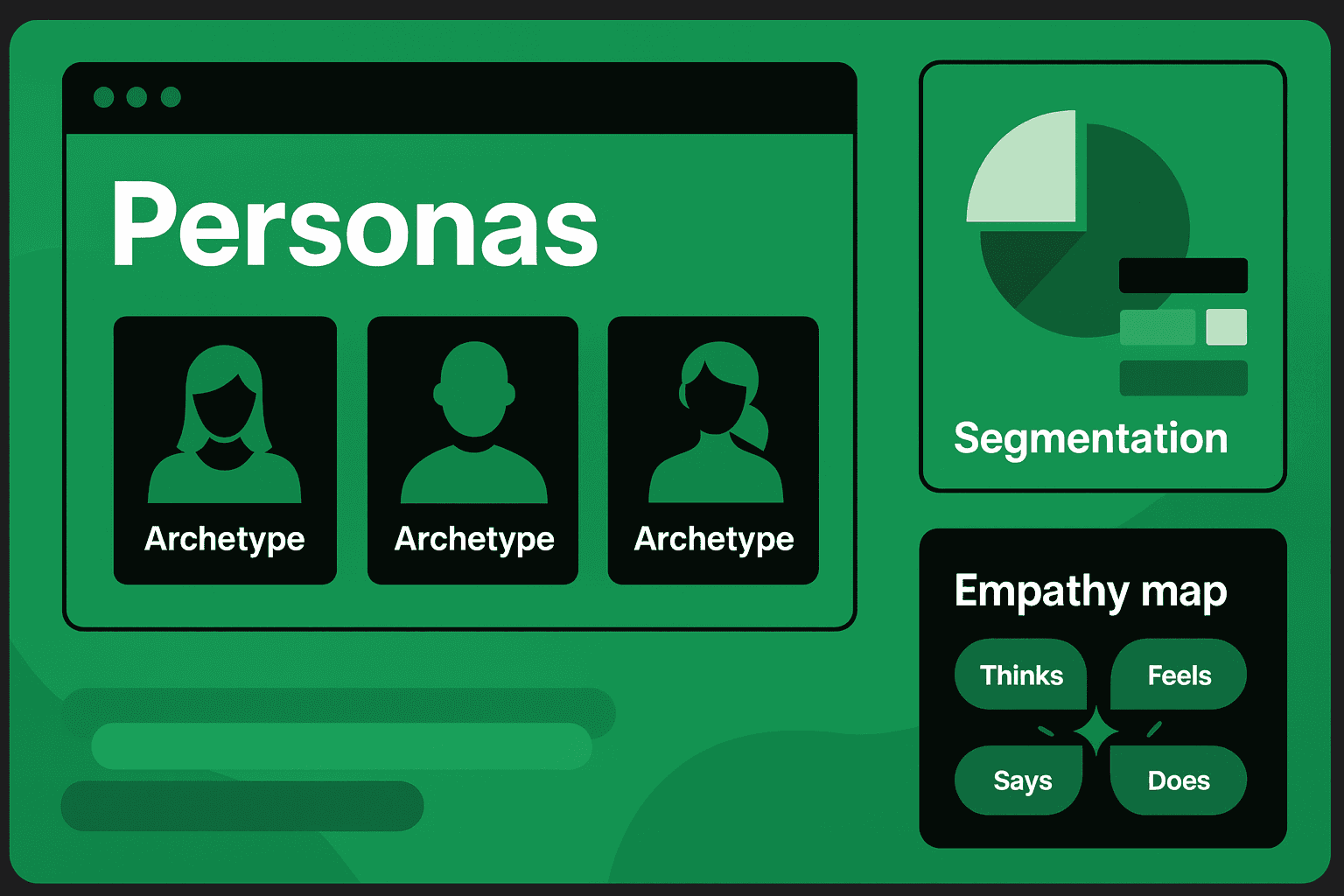
Table: Old Personas vs Rewritten Pivot Personas
Aspect | Old Personas | Pivot-Aligned Personas |
|---|---|---|
Data Source | Hypotheses, legacy research | Fresh persona data + behavioral segmentation |
Focus | Demographics | Motivations, triggers, behaviors |
Relevance | Often outdated | Directly aligned with the new product direction |
Customer Journey | Historic, mismatched | Rebuilt based on the new workflow |
Template Style | Long & descriptive | Lean, decision-ready persona templates |
Team Alignment | Fragmented | Unified across product, UX, and marketing |
How to Rewrite Personas Step-by-Step
1. Gather Fresh Persona Data
Pull from analytics, interviews, feedback loops, and support trends.
2. Identify High-Intent Segments
Behavioral segmentation helps find:
power users
abandoned users
new post-pivot audiences
3. Build Empathy Mapping Around New Motivations
Replace outdated assumptions with real emotional drivers.
4. Reconstruct Customer Journey Mapping
Focus on future journeys, not past ones.
5. Create New Persona Templates
Highlight:
goals
pain points
emotional triggers
behavioral cues
new archetype design
6. Validate Personas Across Teams
Make sure:
marketing personas support messaging
product personas support roadmap decisions
UX personas support design flows
7. Update Regularly
After a pivot, personas should be reevaluated every 2–3 months.
When It’s Time to Rewrite Personas Immediately
✔ After repositioning or rebranding
✔ Post-funding pivot
✔ After entering a new market
✔ After launching new pricing or packaging
✔ When user behavior drastically changes
✔ When new high-intent segments emerge
✔ When revenue shifts to a new audience
Final Thoughts
A product pivot forces teams to rethink everything about the user.
Rewriting personas quickly and strategically ensures your product doesn’t drift away from real customer needs.